
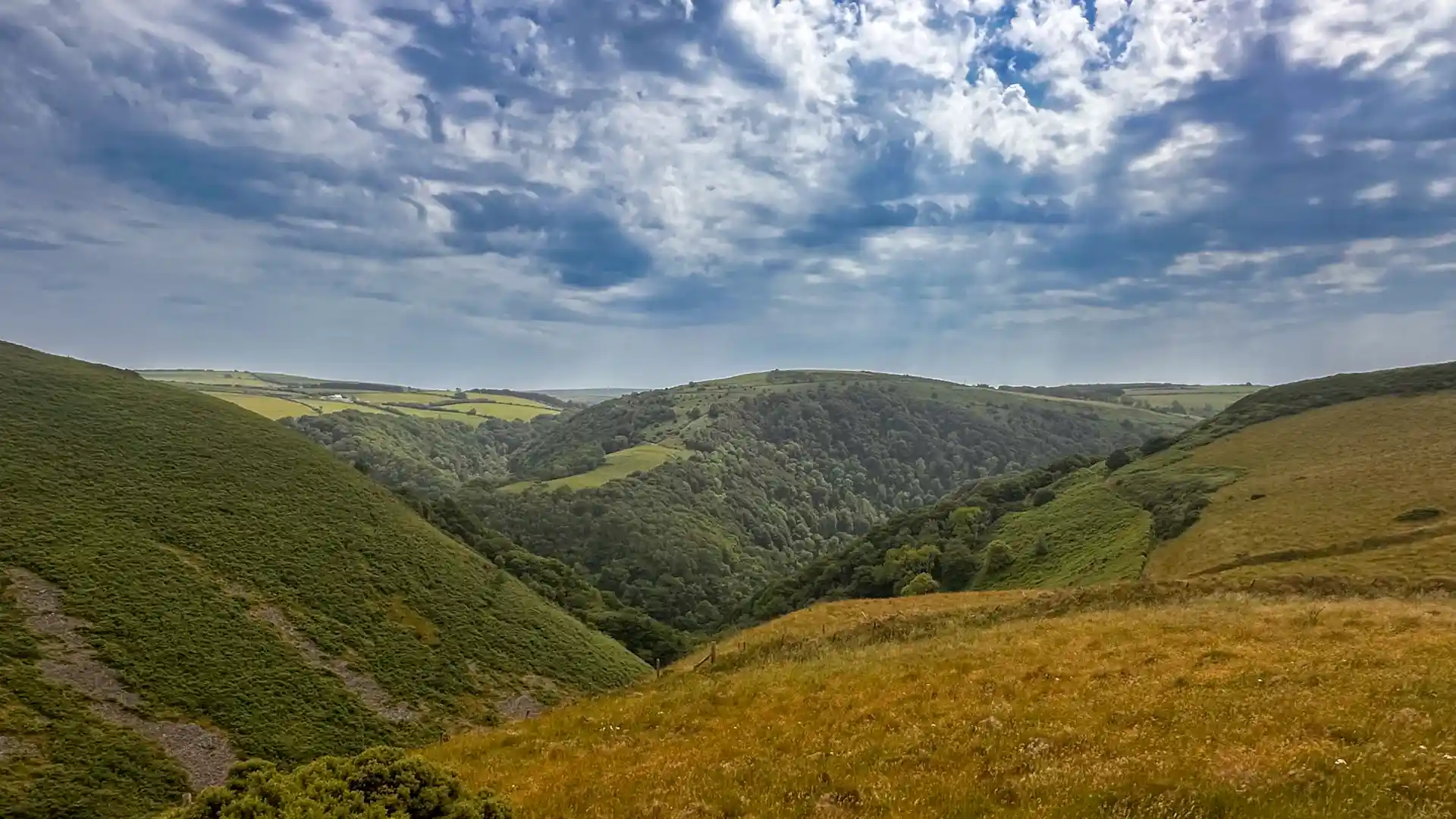
Exmoor National Park – Moorland Plateaus, Deep Valleys, and Wild Coast
A High Moor Landscape Shaped by Uplift, Rivers, and Long Pastoral Use
Exmoor National Park lies on the border between North Devon and West Somerset in South West England. Defined by sweeping upland moorland, deep river valleys, ancient woodland, and a rugged coastline, it is one of England’s most varied and atmospheric landscapes for outdoor adventures.
Walking in Exmoor is shaped by contrast and wildness. High, open moors roll across the plateau, while wooded valleys — known locally as combes — cut steeply towards the sea and inland rivers. The terrain is more demanding than much of southern England, but routes are rarely technical, making Exmoor especially well suited to self-guided journeys for those seeking space, solitude, and a strong sense of place.
Historic routes give structure to walking across the park. The South West Coast Path traces Exmoor’s dramatic northern edge, linking high clifftop walking with wide sea views and remote coastal settlements. Inland, long-established tracks and ridge paths cross the open moorland, while valley routes follow rivers such as the Exe, Barle, Lyn, and Heddon through woodland and pasture.
Together, these routes create a layered walking experience. High-level moorland paths deliver big skies and long horizons, while lower routes wind through oak woodland, river valleys, and sheltered farmland. Sudden changes in landscape are a defining feature of Exmoor walking, with exposed ridges giving way quickly to deeply enclosed, green valleys.
The geology and climate shape everything here. Thin soils and heather dominate the high ground, while rivers carve steep-sided valleys through softer rock below. Atlantic weather brings fast-changing conditions, dramatic light, and a sense of movement that adds to Exmoor’s wild character. Ancient trackways and packhorse routes reinforce the deep connection between the landscape and historic travel.
Village-based walking provides balance to the wilder terrain. Routes link settlements such as Porlock, Dulverton, Lynton, Lynmouth, and Exford, allowing walkers to combine challenging moorland days with gentler valley loops and coastal sections. These villages offer natural stopping points rather than busy centres, helping preserve the park’s calm and uncrowded feel.
Beyond walking, Exmoor is exceptionally well suited to outdoor adventure. Trail running thrives on open moorland and ridge paths, cycling follows quiet lanes and steep valleys, and wildlife watching is rich across the park — from red deer on the moors to seabirds along the cliffs. Exmoor’s status as an International Dark Sky Reserve also makes it one of England’s finest locations for night-sky viewing.
Accommodation is spread across small towns, villages, and isolated farmsteads, from traditional inns and country hotels to walker-friendly B&Bs and rural retreats. Bases such as Dulverton, Porlock, Lynton, Lynmouth, and villages along the Barle and Exe valleys provide excellent access to footpaths, long-distance routes, and quieter corners of the park.
For walkers seeking wild landscapes, varied terrain, and one of England’s most dramatic combinations of moorland, woodland, and coast, Exmoor National Park offers a deeply rewarding walking destination shaped by space, weather, and ancient ground.
Where to Walk and Explore
South West Coast Path (Somerset & Exmoor Section)
High clifftop walking along Exmoor’s northern edge, offering dramatic sea views, deep coastal combes, and some of the wildest coastline in England.
Exmoor Moorland & High Ridges
Open upland walking across heather moor, rolling plateau, and exposed ridges, with wide horizons and a strong sense of remoteness.
River Valleys of the Barle, Exe, and Lyn
Sheltered walking through woodland, riverside paths, and pasture, offering contrast to the open moors above.
Porlock, Lynton & Lynmouth
Village-based walking combining coastal paths, valley routes, and moorland ascents from historic settlements.
Adventure Highlights
- Open moorland walking with big skies and long views
- Dramatic clifftop routes on the South West Coast Path
- Deep river valleys and ancient woodland combes
- Wildlife including red deer, seabirds, and upland birds
- Trail running and challenging cycling on quiet roads
- International Dark Sky Reserve with outstanding night skies
Frequently Asked Questions
Where is Exmoor National Park located?
It lies in South West England, spanning parts of North Devon and West Somerset along the Bristol Channel.
Is Exmoor suitable for on foot travel?
Yes — Exmoor is ideal for walkers seeking varied terrain, from gentle valley routes to more demanding moorland and coastal walks.
How challenging is walking in Exmoor?
The terrain is more rugged than many southern landscapes, with steep valleys and exposed moorland, but routes are well established and rewarding.
Can I combine coastal and inland walking in Exmoor?
Absolutely. The South West Coast Path links seamlessly with inland routes across moorland and river valleys.
What is the best time to visit Exmoor for walking?
Late spring and early autumn offer the best balance of weather, colour, and quieter trails, though Exmoor is rewarding year-round.