
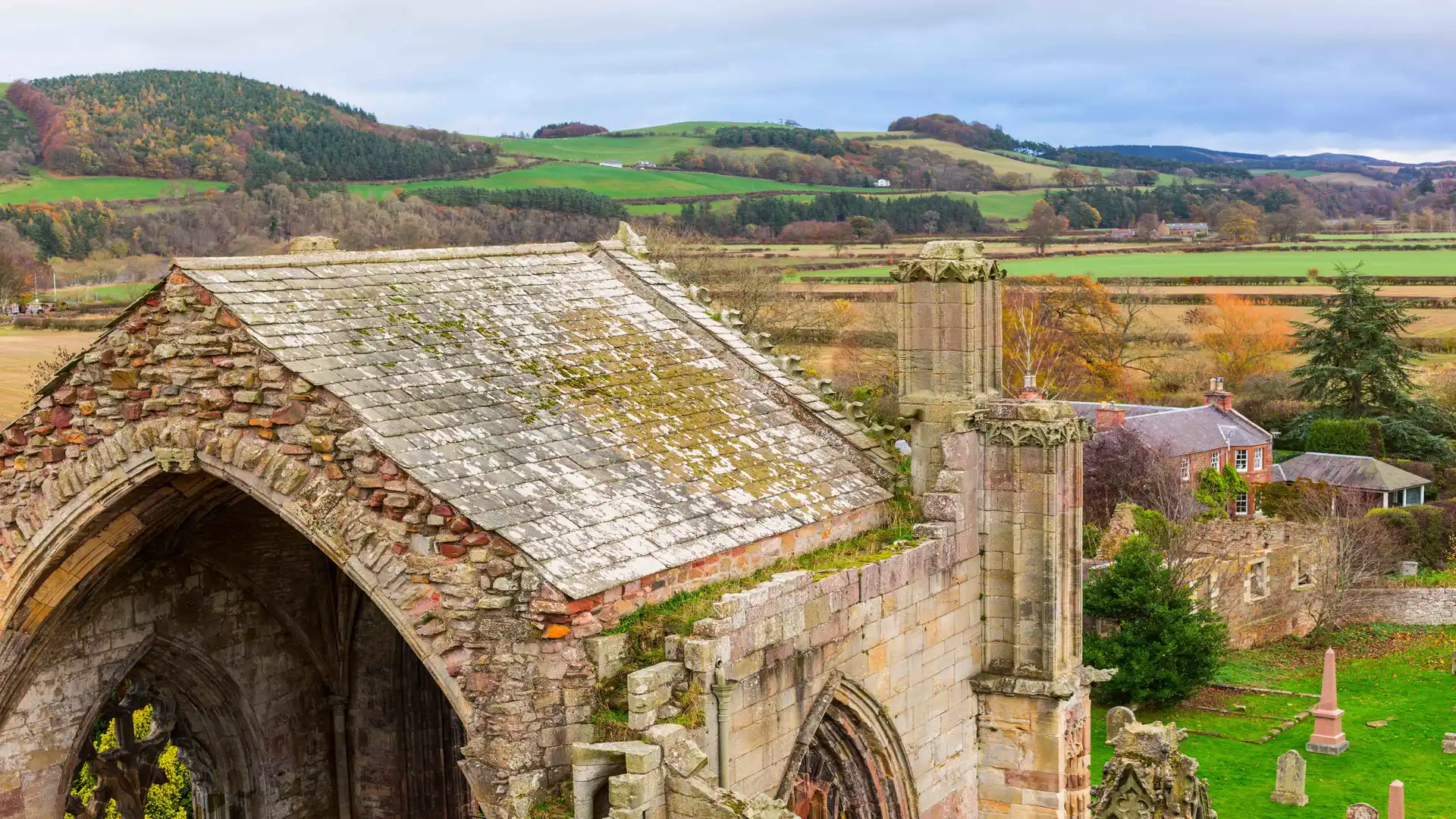
Where low hills meet monastic history — and long-distance trails cross story-rich landscapes.
The Scottish Borders unfold as one of Scotland’s most quietly rewarding landscapes for walking holidays, shaped by soft rolling hills, wide river valleys, historic abbeys, and long ridgelines that feel made for slow travel. Sitting just north of the English border near Kirk Yetholm, the northern terminus of the Pennine Way, the region is perfectly placed for reflective day walks and longer self-guided journeys alike. Walk sections of the Southern Upland Way, circle centuries-old monasteries on the Borders Abbeys Way, or climb the Eildon Hills above Melrose for some of the finest lowland views in southern Scotland.
This is a land shaped by story — Romans, monks, reivers, poets — and today its paths are defined by space and stillness. With gentle gradients and less footfall than the Highlands, the Borders feel calm yet quietly adventurous. In villages, market towns, and along river valleys, you’ll find a wide range of independent places to stay, from small guesthouses to historic inns that suit both short breaks and longer walking itineraries.
Quiet lanes and long valley routes also make the region well suited to slower cycling holidays, linking towns such as Melrose, Kelso, Peebles, and Jedburgh through farmland, woodland, and open Tweedside scenery. For those looking beyond the trail, the Borders offer a gentle blend of heritage, landscape, and water that suits a wide range of outdoor adventures, without the scale or remoteness of Highland terrain.
A coast-to-coast long-distance trail crossing southern Scotland. The Borders stretch between Melrose, Galashiels, Traquair, and Innerleithen follows moorland ridges, forest tracks, river valleys, and open hills with far-reaching views across the Southern Uplands. Ideal for multi-day sections or a full end-to-end walking holiday.
A 68-mile circular route linking four of Scotland’s great medieval monasteries — Melrose, Dryburgh, Jedburgh, and Kelso. Walking here is gentle and varied, combining riverside paths, farmland, old drove roads, and constant historic interest, with regular villages and places to stay along the loop.
A classic Borders pairing of hill and valley walking. Climb the three Eildon peaks above Melrose, then follow peaceful riverside paths along the River Tweed, passing Roman archaeology, woodland, fishing pools, and wide lowland views.
Enjoy a more spacious, reflective side of Scotland — perfect for unhurried itineraries, landscape-led storytelling, and gentle outdoor adventure.
You can walk long-distance trails, explore abbey ruins and castles, follow riverside paths, cycle quiet rural lanes, fish on the Tweed, or wander traditional market towns such as Melrose, Kelso, and Peebles.
The Southern Upland Way, Borders Abbeys Way, and the Eildon Hills & River Tweed paths are the most iconic. Shorter circular walks are also available around Jedburgh, Peebles, and St Boswells.
Yes. Alongside walking, the region offers gentle cycling, horse riding, kayaking, wildlife watching, and low-level hill routes suited to a wide range of abilities.
Late spring to early autumn offers the best conditions for walking and cycling. May and June bring the longest daylight hours, while autumn delivers rich colour and quieter trails.
Yes. The region supports a range of self-guided and guided walking holidays, from weekend breaks around Melrose and Kelso to multi-day journeys along the Southern Upland Way and Borders Abbeys Way, with a good choice of independent places to stay along key routes.