
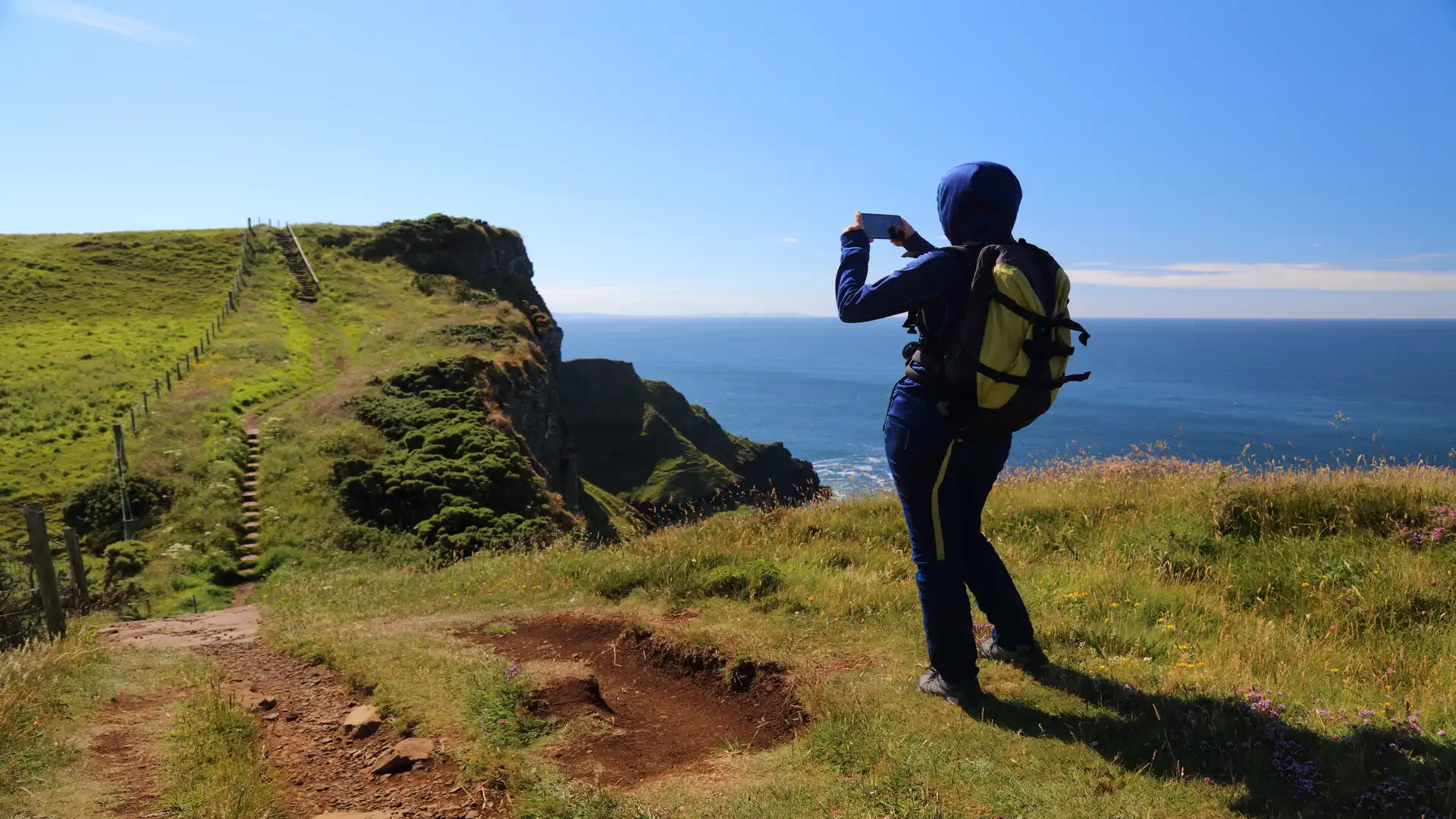
Coastal Path Through Northern Ireland’s Wild North — Clifftops, Castles, and Causeway Wonders
The Causeway Coast Way is one of Northern Ireland’s most spectacular long-distance walking routes — a 33-mile (53 km) trail tracing the rugged coastline between Ballycastle and Portstewart. It’s a journey of wild cliffs, sweeping beaches, ancient ruins, and geological marvels, passing through landscapes recognised for their UNESCO and National Landscape (formerly AONB) status.
Walking here feels elemental — waves crash below basalt headlands, seabirds wheel overhead, and every turn reveals something extraordinary. From the Giant’s Causeway and Dunluce Castle to Carrick-a-Rede Rope Bridge and the quiet beaches of White Park Bay, this is coastal Northern Ireland at its most cinematic.
Trail Overview
Type: Regional Trail (Coastal Route)
Distance: 33 miles / 53 km
Start/End: Ballycastle – Portstewart
Time Required: 2–4 days for the full trail
Terrain: Clifftop paths, beaches, grassy headlands, minor roads
Difficulty: Moderate — some exposed sections and short climbs
Accessibility: Good public transport between towns; easy to walk in sections
Explore the Route
Ballycastle to Ballintoy
A scenic opening section featuring cliffs, sea stacks, and the famous Carrick-a-Rede Rope Bridge. Views stretch across to Rathlin Island and Scotland on clear days.
Ballintoy to Giant’s Causeway
Perhaps the trail’s most iconic stretch — following dramatic coastline to the UNESCO-listed Giant’s Causeway, where 40,000 basalt columns meet the sea.
Giant’s Causeway to Portrush
Gentler coastal walking through dunes, beaches, and fishing villages. Highlights include Dunluce Castle, White Rocks Beach, and the lively seaside town of Portrush.
Portrush to Portstewart
A relaxing finale with sandy trails, golf links, and long coastal views. Ideal for a half-day walk or evening stroll to finish the route.
Stay and Explore
Towns & Villages: Ballycastle, Ballintoy, Bushmills, Portrush, Portstewart
Accommodation: Family-run B&Bs, coastal inns, boutique guesthouses, and self-catering cottages
Food & Drink: Local seafood, Bushmills whiskey, coastal cafés, and traditional pubs
Nearby Trails: Ulster Way (Northern Section), Roe Valley Way, Glens of Antrim walks
Adventure Highlights
- Walk through the Giant’s Causeway UNESCO World Heritage Site
- Explore Dunluce Castle, Carrick-a-Rede Rope Bridge, and White Park Bay
- Experience some of Ireland’s most dramatic coastal scenery
- Well-marked route, easy section walking for weekend trips
- Links with other Northern Ireland walking routes and scenic drives
