
Cotswolds National Landscape – Limestone Hills, Valleys, and Pastoral Plateaus
A Limestone Plateau Landscape Shaped by Farming, Villages, and Long Settlement
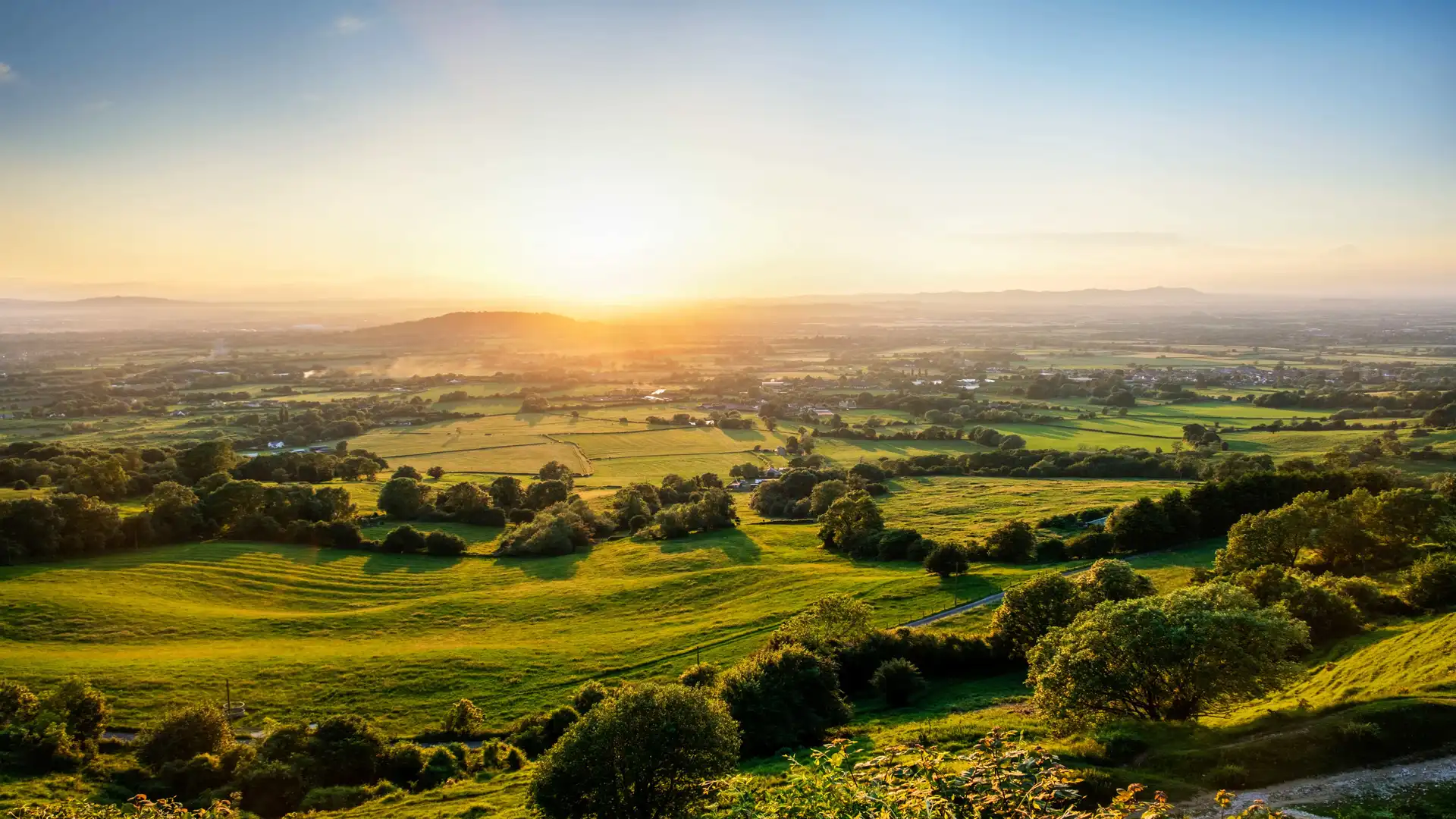
The Cotswolds National Landscape — formerly designated as an Area of Outstanding Natural Beauty — is England’s largest protected landscape, stretching across parts of Gloucestershire, Oxfordshire, Warwickshire, Wiltshire, and Worcestershire. Defined by rolling limestone hills, dry valleys, and stone-built villages, it represents one of the country’s most enduring and recognisable countryside settings.
Walking in the Cotswolds is shaped by openness, rhythm, and continuity. Broad ridges, shallow valleys, riverside meadows, and farmland sit within a compact, well-connected landscape, allowing walkers to combine gentle day walks with longer village-to-village journeys. The terrain is rarely steep, making the area especially well suited to relaxed, self-guided journeys at a wide range of paces.
Historic routes give structure to walking across the Cotswolds. The Cotswold Way National Trail follows the western escarpment from Chipping Campden to Bath, offering long-distance ridge walking with expansive views across the Severn Vale. The trail culminates in the historic city of Bath, a UNESCO World Heritage Site whose Roman origins and Georgian architecture form a striking cultural counterpoint to the rural landscapes of the hills.
Together, these routes create a layered walking experience. High-level ridge paths deliver wide views and open skies, while valley routes follow rivers such as the Windrush, Coln, Evenlode, and Churn through meadows and historic settlements. Dry-stone walls, historic farmsteads, and church towers shape the landscape at every turn, reinforcing the strong sense of place that defines walking in the Cotswolds.
The limestone geology underpins everything here. Spring-fed streams emerge from the hills, dry valleys cut softly through the plateau, and pale stone gives villages their distinctive colour and character. Walking routes move seamlessly between open countryside and built landscapes, with little sense of separation between village, field, and footpath.
Village-based walking is one of the Cotswolds’ greatest strengths. Routes link classic settlements such as Chipping Campden, Winchcombe, and Broadway, while quieter villages like Stanton and Painswick offer peaceful bases close to escarpment paths, open farmland, and traditional village pubs. These destinations allow walkers to build flexible itineraries that combine ridge walking, valley routes, and short circular loops directly from the doorstep.
Beyond walking, the Cotswolds are well suited to gentle outdoor adventures. Cycling follows quiet lanes and rolling countryside rather than challenging gradients, making it ideal for relaxed touring. Trail running, wildlife watching, and slow exploration fit naturally within the landscape’s scale and tempo, while riverside paths and woodland edges add seasonal variety.
Accommodation is woven throughout the region, from historic inns and village B&Bs to countryside hotels and rural retreats. Bases such as Stanton, Broadway, Painswick, Winchcombe, and Chipping Campden provide excellent access to footpaths, long-distance trails, and classic walking routes across the National Landscape.
For walkers seeking classic English countryside, limestone villages, and a deeply established network of paths within a gentle, welcoming landscape, the Cotswolds National Landscape offers one of England’s most rewarding walking destinations.
Where to Walk and Explore
Cotswold Way National Trail
A 102-mile long-distance route from Chipping Campden to Bath, following the limestone escarpment with wide views, historic landmarks, and classic ridge walking.
Northern Cotswolds & Escarpment Villages
High ground and open walking around Chipping Campden, Broadway, Winchcombe, and Stanton, with sweeping views and strong links to the Cotswold Way.
Painswick & the Cotswold Valleys
Valley walking through wooded slopes, streams, and historic landscapes centred on Painswick and the southern Cotswolds.
Windrush & Coln Valleys
Gentle riverside walking linking meadows, mills, and some of the region’s most recognisable stone villages.
Adventure Highlights
- Rolling limestone hills and open countryside walking
- Long-distance routes on the Cotswold Way National Trail
- Village-to-village walking between historic Cotswold settlements
- River valley routes through meadows and wooded slopes
- Quiet lanes and bridleways for cycling and trail running
- A rare blend of rural landscapes and cultural heritage at Bath
Frequently Asked Questions
Where is the Cotswolds National Landscape located?
It spans parts of Gloucestershire, Oxfordshire, Warwickshire, Wiltshire, and Worcestershire in central southern England.
Is the Cotswolds suitable for walking and exploring?
Yes — it is ideal for gentle to moderate walking, with well-marked paths, village links, and excellent accommodation options.
How challenging is walking in the Cotswolds?
The terrain is generally rolling rather than steep, making it accessible to most walkers, including beginners.
Can I combine countryside walking with historic towns?
Absolutely. The Cotswold Way links directly to Bath, a UNESCO World Heritage Site, creating a unique rural-to-cultural walking journey.
What is the best time of year to visit?
Spring and early autumn are especially popular for mild weather and countryside colour, though the Cotswolds are rewarding year-round.