
Dartmoor National Park – Granite Tors, Open Moor, and Enclosed Valleys
A Granite Upland Landscape Shaped by Uplift, Weathering, and Commons
Dartmoor National Park lies in the centre of Devon in South West England and is one of the country’s wildest and most distinctive walking landscapes. Defined by expansive open moorland, granite tors, deep river valleys, and ancient woodland, Dartmoor offers a powerful sense of space, exposure, and freedom that sets it apart from England’s lower, gentler countryside.
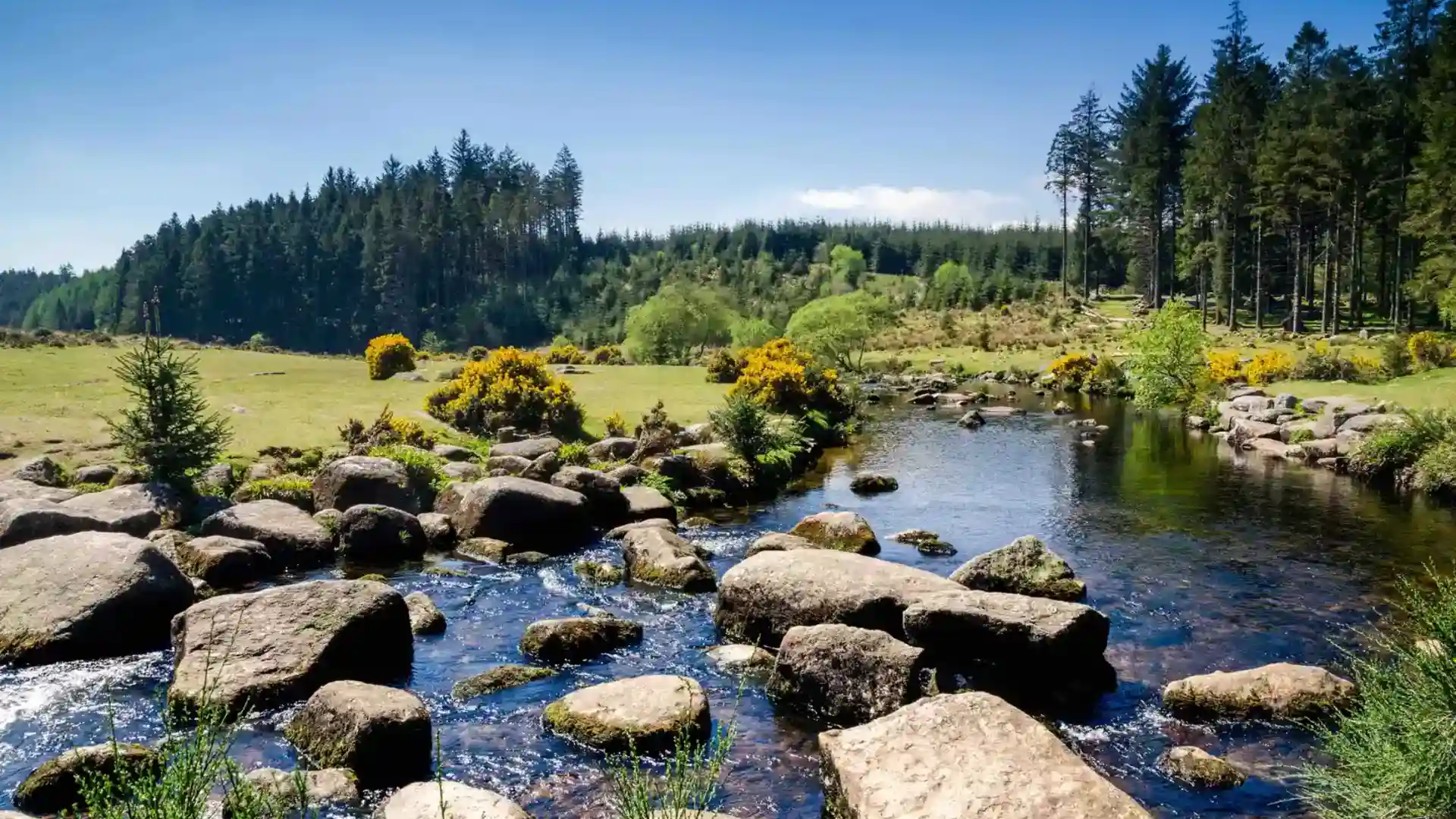
Walking on Dartmoor is shaped by scale and elemental landscape. High open moors dominate the plateau, where long views stretch to the horizon and walking routes cross rough grassland, peat, and stone. In contrast, deep-cut river valleys carve into the uplands, creating sheltered corridors of woodland, moss-covered rocks, and fast-flowing water. This dramatic variation allows walkers to experience both wild openness and intimate enclosure within a single journey.
The moor’s granite geology defines the walking experience. Tors rise above the plateau as natural landmarks, shaping navigation and movement across the open ground. Paths are often informal, following ancient lines of travel rather than engineered routes, reinforcing Dartmoor’s untamed character. Underfoot conditions vary with season and weather, adding to the sense of adventure and engagement with the landscape.
Historic routes give structure to longer journeys across Dartmoor. Ancient trackways, packhorse routes, and drove roads cross the moor, linking settlements and valleys that have been connected for centuries. The Two Moors Way runs through the park as part of its coast-to-coast journey, offering long-distance walkers a sustained traverse of Dartmoor’s high ground and river valleys.
Walking on Dartmoor rewards awareness rather than speed. Weather can change quickly, light shifts constantly across the moor, and the absence of hedges or trees on high ground creates a feeling of exposure rarely found elsewhere in southern England. Lower routes along rivers such as the Dart, Teign, Tavy, and Walkham offer quieter, more sheltered walking through woodland, pasture, and rocky gorges.
Village-based walking provides balance to the open moor. Routes link settlements such as Princetown, Postbridge, Widecombe-in-the-Moor, and villages along the park’s edges, allowing walkers to combine high moorland days with gentler valley loops and historic village paths. These villages act as gateways rather than centres, helping preserve Dartmoor’s sense of remoteness.
Beyond walking, Dartmoor is exceptionally well suited to outdoor adventure. Trail running thrives on open moorland and long ridgelines, cycling follows quiet lanes and steep valley roads, and wildlife watching is rich across the park — from ponies and sheep grazing the moor to birds of prey and rare upland species. Dartmoor’s status as a Dark Sky landscape also makes it one of southern England’s best places for night-sky experiences.
Accommodation is scattered across the moor and its surrounding valleys, from traditional inns and country hotels to walker-friendly B&Bs and remote farm stays. Bases around the edges of the park provide access to footpaths, long-distance routes, and quieter sections of the moor, allowing walkers to tailor itineraries to experience both exposure and shelter.
For walkers seeking wild upland scenery, ancient landscapes, and one of England’s most powerful senses of place, Dartmoor National Park offers a deeply rewarding walking destination shaped by stone, weather, and time.
Where to Walk and Explore
Open Moorland & Granite Tors
High-level walking across Dartmoor’s central plateau, with wide horizons, granite landmarks, and a strong sense of remoteness.
River Valleys & Gorges
Sheltered routes through woodland and rocky valleys, following rivers as they cut deep into the moorland from the high ground above.
Two Moors Way (Dartmoor Section)
Long-distance walking across open moor and river valleys as part of the route linking Dartmoor and Exmoor.
Eastern & Southern Moorland Edges
Quieter walking where open moor meets farmland and woodland, offering gentler routes with easier access and navigation.
Village-Based Circular Walks
Flexible loops from moorland villages combining tors, valleys, ancient tracks, and historic lanes.
Adventure Highlights
- Expansive open moorland walking beneath big skies
- Granite tors and upland plateau routes
- Deep river valleys, woodland, and rocky gorges
- Long-distance walking on the Two Moors Way
- Trail running and challenging cycling on quiet terrain
- Free-roaming ponies and wildlife-rich uplands
- One of southern England’s most dramatic landscapes
Frequently Asked Questions
Where is Dartmoor National Park located?
Dartmoor lies in the centre of Devon in South West England, covering a large upland area between Exeter and Plymouth.
Is Dartmoor suitable for self guided travel?
Yes — Dartmoor is ideal for experienced walkers seeking wild terrain, varied routes, and a strong sense of space, as well as for gentler valley-based walking.
How challenging is walking on Dartmoor?
Walking can be demanding due to exposure, rough ground, and navigation, especially on high moorland. Valley routes are generally gentler and more sheltered.
Can I walk on Dartmoor without a car?
Yes. Moorland-edge villages and towns provide rail and bus access, with footpaths leading directly onto the moor and into river valleys.
What is the best time of year to visit Dartmoor?
Late spring to early autumn offers the best balance of daylight and weather, though Dartmoor’s atmosphere changes dramatically with the seasons.