
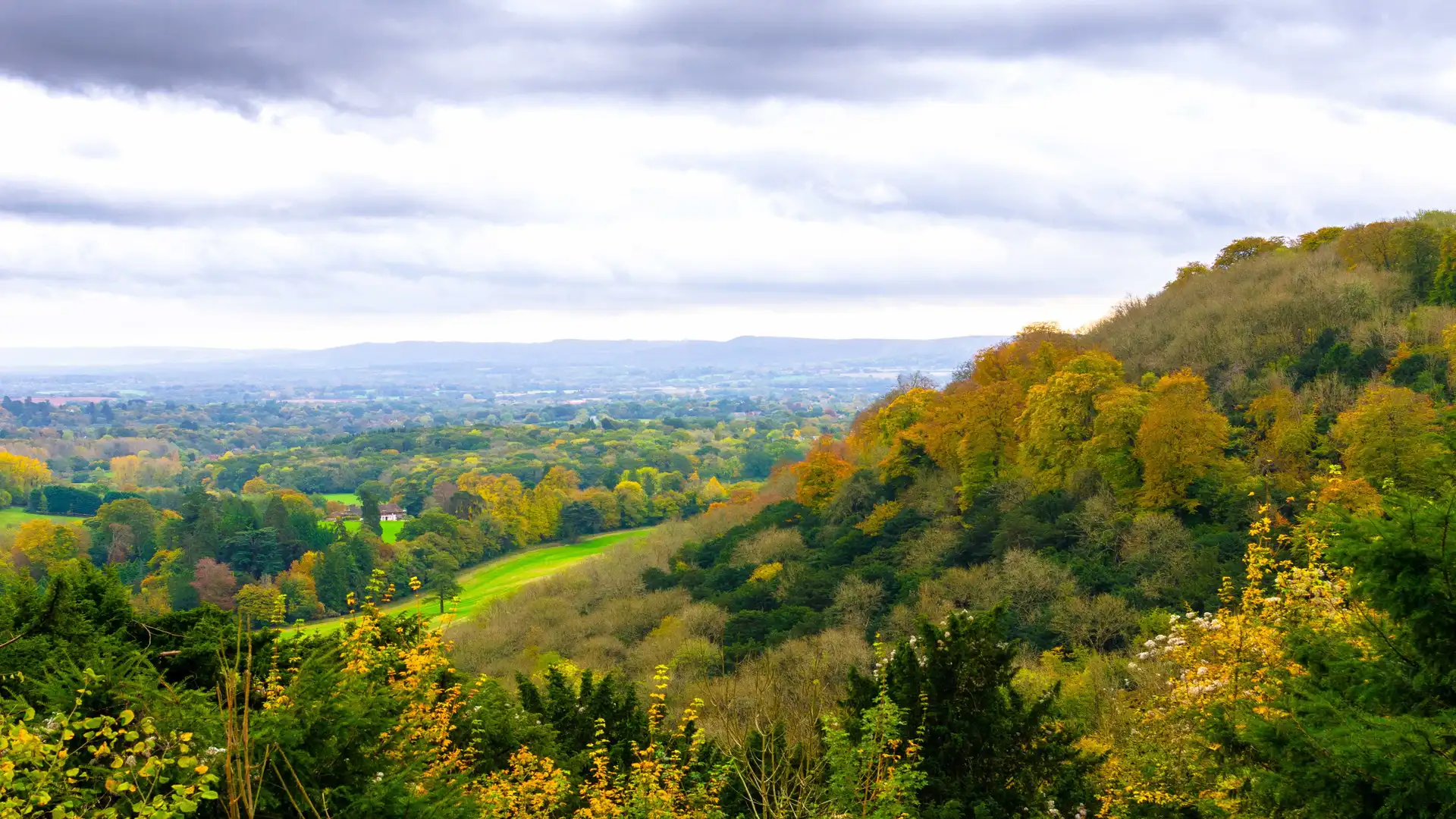
South Downs National Park – Chalk Ridges, River Valleys, and Open Downland
A Long Chalk Landscape Shaped by Escarpments, Agriculture, and Settlement
The South Downs National Park stretches across southern England from Hampshire through West Sussex and East Sussex to the edge of the English Channel. Shaped by chalk ridges, dry valleys, rolling downland, and dramatic coastal cliffs, it is one of England’s most expansive and accessible landscapes for walking and outdoor adventures.
Walking in the South Downs is defined by openness and continuity. Broad ridges rise gently above farmland, woodland, and river valleys, offering long views across the Weald to the north and towards the sea in the south. The terrain is rolling rather than mountainous, making the park especially well suited to relaxed, self-guided jouneys that favour distance, rhythm, and immersion in the landscape.
Historic routes give clear structure to walking across the park. The South Downs Way follows the chalk ridge from the historic city of Winchester to the coastal town of Eastbourne, forming one of England’s most iconic long-distance walking routes. Along the way, the trail passes ancient hillforts, open downland, river valleys, and some of the finest chalk scenery in the country.
Together with older trackways and local footpaths, this creates a layered walking experience. High-level ridge routes deliver wide horizons and open skies, while valley paths follow rivers such as the Arun, Ouse, and Meon through meadows, woodland, and traditional villages. Dry valleys cut softly through the downs, and chalk grassland supports rich wildflower displays in spring and summer.
The chalk geology underpins everything here. Thin soils, spring lines, and open slopes shape a landscape that feels light, spacious, and deeply connected to ancient patterns of movement. Walking routes often follow prehistoric trackways and drovers’ roads, reinforcing the sense of continuity between past and present.
Village-based walking plays a central role in the South Downs experience. Routes link settlements such as Alfriston, Lewes, Amberley, Petersfield, and Steyning, allowing walkers to combine ridge walking with valley loops and village-to-village journeys. On the eastern edge of the park, coastal walking around the Seven Sisters offers a dramatic contrast to the inland downs, where white cliffs meet open grassland and the sea.
Beyond walking, the South Downs are well suited to a wide range of outdoor adventures. Cycling follows quiet lanes and bridleways across rolling terrain, trail running thrives on open ridges and escarpments, and wildlife watching is rich across chalk grassland, woodland, and river valleys. The mix of inland and coastal landscapes allows for varied, multi-day exploration without long transfers.
Accommodation is spread throughout the park, from village inns and walker-friendly B&Bs to countryside hotels and rural retreats. Bases such as Winchester, Petersfield, Lewes, Alfriston, and villages along the South Downs Way provide excellent access to footpaths, long-distance routes, and rail connections, making the park especially suitable for car-free walking exploration.
For walkers seeking open landscapes, historic routes, and long, uninterrupted journeys across classic chalk countryside, the South Downs National Park offers one of England’s most rewarding walking destinations.
Where to Walk and Explore
South Downs Way National Trail
A 100-mile ridge route from Winchester to Eastbourne, following the chalk downs through open countryside, historic sites, and classic southern landscapes.
Seven Sisters & Coastal Downs
Dramatic clifftop walking where chalk grassland meets the English Channel, offering some of the most iconic coastal scenery in England.
River Valleys of the Downs
Gentler walking along the Arun, Ouse, and Meon valleys, linking meadows, woodland, and traditional villages beneath the chalk ridges.
Village-to-Village Routes
Footpaths connecting settlements such as Lewes, Alfriston, Amberley, and Steyning, combining ridge paths with valley loops.
Adventure Highlights
- Long-distance walking on the South Downs Way
- Rolling chalk ridges and wide open downland
- Coastal walking at the Seven Sisters cliffs
- Ancient trackways, hillforts, and historic villages
- Quiet lanes and bridleways for cycling and trail running
- Excellent rail access for car-free walking holidays
Frequently Asked Questions
Where is the South Downs National Park located?
It lies across southern England, stretching from Hampshire through West and East Sussex to the English Channel.
Is the South Downs suitable for journeys on foot?
Yes — the park is ideal for gentle to moderate walking, with long-distance trails, open ridge routes, and well-connected villages.
How challenging is walking in the South Downs?
The terrain is rolling rather than steep, making it accessible to most walkers, while still offering long, rewarding days on the hills.
Can I walk from inland towns to the coast?
Absolutely. The South Downs Way runs from Winchester to Eastbourne, creating a classic inland-to-coast walking journey.
What is the best time of year to visit?
Late spring and early summer are ideal for wildflowers and long days, while autumn offers clear views and quieter trails.